Healing Weeds - Getting a closer contact with the healing world of herbs and wild plants.

Showing posts with label antibacterial. Show all posts

Wednesday, September 18, 2013

Horseweed

Conyza canadensis
Horseweed / Canadian Fleabane
NL: Canadese fijnstraal / F: Vergerette du Canada

Native from North America, this plant made its way all over Europe and many other parts of the world. It may not be the prettiest plant one would choose to keep in the garden, neither is it among the most popular plants in modern herbalism. Nevertheless Horseweed, or Canadian Fleabane, as it is also called, was used by most Native North Americans tribes to treat various illnesses, including diarrhea, fever, running nose, rhinitis, but also used to arrest bleedings or to relieve stomach aches, earaches or headaches. Externally, it was made into poultices to treat burns and sore joints. Roots were used in decoction teas to treat menstrual complaints. Dried and burned as incense it was used to ward off insects.


In today’s herbalism Horseweed is mostly employed where an astringent is required: diarrhea, internal hemorrhage, nosebleeds, hemorrhoids, etc. It has been recently researched for its antioxidant, antibacterial, antiviral and anti-fungal properties, including against candidiasis - looks promising!

Further one can still find references of folk usages of this plant to treat cholera, rheumatism, tuberculosis, bronchitis, inflamed tonsils, diabetes, menopausal symptoms, kidney and bladder conditions, eczema and ringworm.

It is an edible plant, especially the young leaves, cooked, can be prepared as potherb, or used in the same way as other dark greens. Because of its powerful medicinal properties, it should be eaten sparingly, not in large amounts. It can also be dried and used as food spice - it gives an aromatic flavour to dishes.


Warning: Skin contact with the plant can cause dermatitis in some people.

More information on Conyza canadensis:

Plants for a Future: Conyza canadensis

Antiviral activity of Conyza canadensis (L)

Antibacterial, antioxidant and cytotoxic activities of extracts of Conyza canadensis

Antimicrobial activities of Conyzolide and Conyzoflavone from Conyza canadensis


Tuesday, September 17, 2013

Goldenrod

Solidago canadensis
F: Verge D'or  - Solidage / NL: Guldenroede

Goldenrods can be seen in flower all over the fields, gardens, in most places in Europe from August till October, depending on the region. Its flowers show all their glory when most other plants are no longer in flower, to the joy of the bees, which are delighted to feast on them.

Luckily for Goldenrod's lovers, this plant has been studied by the scientific community and some of its properties have been already recognized - by the German Commision E - for its effectiveness when used in the treatment of illnesses of the urinary tract. Its restorative, anti-inflammatory, tonic and cleansing properties make it one of the top herbs to aid in any kidney and bladder condition, including kidney stones, nephritis and cystitis.


Next to that Goldenrod also has anti-fungal, anti-bacterial, diaphoretic, antiphlogistical, astringent, spasmolytic, hemostatic, anti-mucus, expectorant and anti-oxidant properties. It has been used in folk medicine for centuries to help in the treatment of a wide range of conditions such as seasonal allergies, asthma, colds and flu, tuberculosis, capillary fragility (e.g. varicose veins, hemorrhoids, hemorrhage) and even diabetes mellitus.

Externally it can help disinfecting and healing wounds and various skin problems. It can also be “soaked” in oil to be used in ointments or salves to relieve pain - both muscular and rheumatic pain.

On the top of all these healing properties, Goldenrod has also high amounts of antioxidants - more than green tea!! Its antioxidants work scavenging free-radicals, cleaning up the body, helping to heal and prevent a great deal of illnesses. It is also a delicious tea to use.


Its leaves and flowers are edible, raw or in soups and stews.

There are more than hundred species of Solidago and the most commonly found types (S. virgaurea, S. gigantea, S. canadensis) can apparently all be used in a similar way. Their medicinal properties will surely vary in potency though, depending on the species, on where it grows, etc.


a happy bee feasting on its flowers


In the links below you will find enriching information on Solidago plants:

How to identify Solidago / Goldenrods - LuminEarth

Edible and Medicinal Plants - Goldenrod - Sigma 3 Survival School

Goldenrod: A Torch of Healing - Methow Valley Herbs

Glorious Goldenrod - Susunweed.com


Of Solidago Canadensis: phenolic composition and biological activity

Antioxidant and Radical-Scavenging Activity of Flavonoids From Solidago canadensis

Antibacterial and antimutagenic activity of extracts aboveground parts of three Solidago species.


Wednesday, August 7, 2013

St John’s Wort


Hypericum perforatum
NL: St Janskruid / 
F: Millepertuis


St John’s Wort (SJW) is another powerful herb with a long history as folk medicine. In our days St John’s Wort got great media attention for aiding in the treatment of those suffering from depression, being known as the “natural prozac”

Long before SJW got to be used to treat depression, it was considered to be a “herb that chases the evil spirits away” as it was used to treat various types of insanity attacks. Paracelsus was whom mentioned it for the first time for treatment of a wide range of psychotic symptoms. Even though it is not yet clear to modern medicine how exactly SJW works on the nervous system, its nervine action is recognized by herbalists around the world.

Its most widespread use in herbal medicine is in healing wounds, bruises, sunburn, herpes, skin ulcers and inflammations. Most of its skin healing abilities are attributed to its properties as analgesic, antiviral, antibacterial, antiseptic and astringent. In poultices, oils, salves and ointments it is used to heal many skin problems. 

As expectorant it is also employed to treat conditions of the respiratory tract. It is also used to help healing bladder problems, such as urine incontinence.

SJW should not be used by pregnant women. People using St John’s Wort are advised to avoid direct exposure to sunlight SJW, especially during summertime when the U.V. levels ar emuch higher, as it increases photosensitivity. 


Another word of caution goes to people taking prescription drugs: SJW contains chemical compounds that may block or alter the effect of several drugs. For a more extended list of interactions between some prescription drugs and SJW, click here

The (fresh) flowers are the most active part of the plant and they can be harvested from June to August. They can also be dried for further. Fresh or dried flowers can be prepared as teas, tinctures or in infused oil. 


The famous St John’s Wort oil can be used for healing skin conditions and to reduce pain and inflammation in the muscles and articulations - as in bruises, arthritis and even sciatica. To prepare the infused oil, gather the mature flowers around noon (after the morning dew has been evaporated) and place them in a clean, dry glass bottle (transparent). Cover the flowers with vegetable oil (almond, olive oil, sunflower oil, etc). Cover with a paper towel and a rubber band to avoid dust and insects from falling in. Leave it in a sunny window for 2 to 3 weeks, depending on how much sun you have. If you prefer to leave the oil under direct sunlight outside, even better. You must only care to bring the bottle every day to a sheltered place, where it can remain free from (condensed) moist or rain. You may keep adding new flowers to the oil every new harvest, so that the oil becomes more concentrated. When the oil gets a bright reddish color, it is ready to be used. Sieve the flowers with a clean cheese cloth into a dark glass bottle. Close the bottle tightly and label it with the date of bottling. Keep it in a cool, dark and dry place. 


In the links below you will find more practical information on identifying, harvesting and preparing St John's Wort. There is also a list of drug interactions that might occur with the regular use of SJW.


Hypericum - St Joan/John's Wort - with Susun Weed


Thursday, May 2, 2013

Burdock

Arctium minus / A. lappa
NL: Grote klit / F: Bardane

One more amazing plant, with both great nutritional value as well as a long history of use in traditional herbal medicine.

The young stalks and leaves are edible, raw or cooked, but the young roots are the most popular part of this plant. The roots should be harvested when they reach up to 60 cm, since they can get “woody” as they grow further. The seeds can be sprouted and used in raw salads or lightly stirred in olive oil.


It is a powerful cleansing herb and, similarly to curly dock, it has been traditionally used in the treatment of a wide range of skin illnesses, infections and even cancer. Its blood purifying properties are so effective as in helping the body to get rid of heavy metals and a wide range of toxins. The roots also have antibacterial and anti-fungal action and combining that with its depurative properties, makes it a great herb to help healing eczema, rheumatic conditions, acne, rashes, and several types of inflammatory illnesses.

More on burdock:

Survival Plants Memory Course: Arctium Minus

Burdock in Trational Chinese Medicine:

Niu Bang Zhi - Chinese Herbal Medicine


Here are two recipes with burdock roots to inspire your culinary talents:

Japanese style pickled burdock

Classic Kinpira Gobo


Wednesday, September 26, 2012

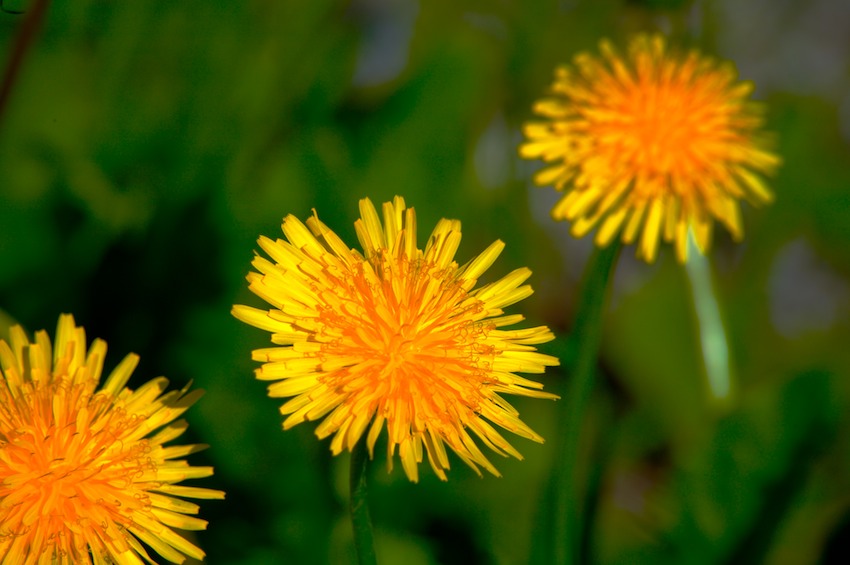
Dandelion

Taraxacum officinale
NL: Paardenbloem - F: Pissenlit

Well known for its long list of medicinal properties, this beautiful and powerful plant is also loaded with essential nutrients, which makes it a top plant in any survival situation.

It grows in most countries around the world, particularly in the temperate zones of the Northern hemisphere and withstands a wide array of soil types and weather conditions. It does not need any special care.  Dandelions are among the most nutritious greens that one can eat. Some raw foodists claim one could survive only eating dandelions if needed.

As food, it is very rich in vitamin A and C, calcium and iron. With only 55g of dandelions one meets 112% of his daily needs for vitamin A, 32% of the daily needs for vitamin C, 535% of the daily needs of vitamin K and about 10% of one’s daily needs for calcium and iron. It is also a good source of folate, magnesium, phosphorus and copper, and a very good source of Vitamin E (Alpha Tocopherol), thiamin, riboflavin, vitamin B6, potassium and manganese.


young leaves are less bitter
Leaves and flowers can be used fresh, in salads, green juices, in vegetable pies, pancakes, with mashed potatoes, in soups, bread, etc. It has a bitter taste, being less strongly bitter when harvested before blooming.

The roots can also be eaten raw or can be dried to be used in herbal teas. they can still be roasted to make a tasty and rich dandelion coffee.

Its most well studied applications in herbal medicine are as liver and gall bladder tonic and cleanser, diuretic and depurative. As diuretic it adds potassium to the body, as opposed to most diuretics, helping to balance the mineral content in the blood, and it can also help bring blood pressure to normal levels.

Seeds ready to fly high and conquer the world


Dandelions also favors digestion and general metabolism, include glucose metabolism, so it can help with diabetes, as well as with weight loss. It has some antibacterial and anti-yeast action. Also a great herb to relieve PMS symptoms.


bees love it!


Here is a very good video on dandelions:

 Dandelions - Edible and medicinal uses

And here you can learn how and why to use dandelion greens in your smoothies:

10 Reasons to use Dandelion greens

More recipes with dandelions (I prefer to leave the flowers to the bees, who are facing lately a "food shortage", but the rest of the recipes seem great):

Eat the Weeds: Dandelions Hear Them Roar


More on how to preserve its roots:

Harvesting and preserving dandelion roots

And here two more extensive articles from other dandelion passionates:

The Health Benefits of the Humble Dandelion

Dandelion, my favorite spring herb - by Lesley Tierra

In the link below you will find an extensive description of dandelion and learn how to distinguish it from its look-alikes:

Survival Plants Memory Course: Taraxacum officinale

Here is a 20 minutes long video where Cascade Anderson Geller shares her knowledge on identifying, harvesting and using dandelions:

Dandelion, by HerbMentor

And last but not least, a video on how important dandelions are for healthy soils:

Dandelions on permaculture - Paul Wheaton