Healing Weeds - Getting a closer contact with the healing world of herbs and wild plants.

Showing posts with label Foraging. Show all posts

Sunday, October 11, 2015

Sweet chestnuts x Horse chestnuts


This time of the year we can find plenty of sweet chestnuts (Castanea sativa) available in most urban parks or in any little piece of nature where the chestnut trees were allowed to grow and do their job.

Chestnuts are highly nutritious and they rank among some of the most ecologically responsible foods you can think of.  

The only thing you need to know is how to tell the edible chestnuts from the horse chestnuts, which are usually shedding their fruits at the same period.

Here are some pictures of the sweet chestnut to help you identify them.


The main features to help you identify the edible sweet chestnuts are the little "tail" on the nuts, their husk and the shape of the leaves.


Here are some pictures from the horse chestnut (Aesculus hippocastannum) so that you can see how different they are from the sweet chestnuts. Note that this plant and nuts are NOT edible. That is why it is so important to learn the clear difference between the two of them.
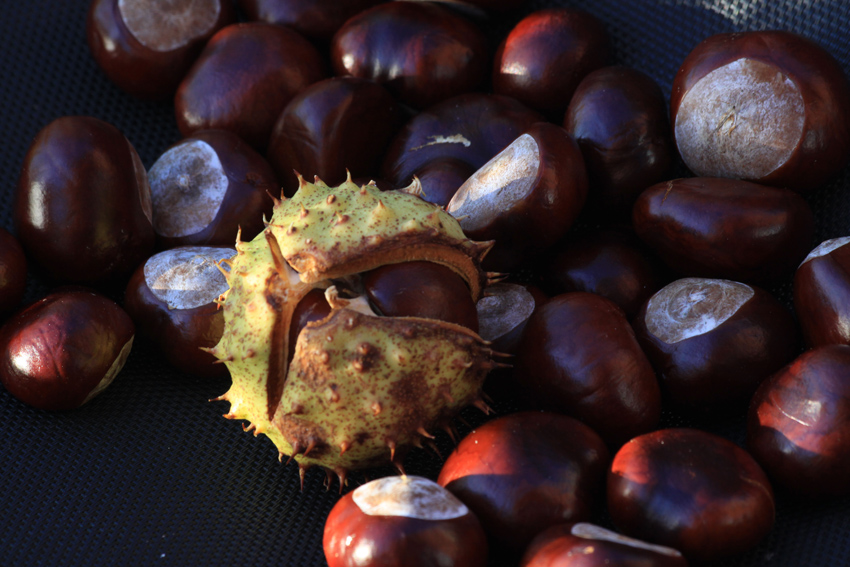

The nuts of the horse chestnut are round without the little "tail". Also the husk contains less spikes compared to sweet chestnuts.


this is how the leaves of the horse chestnut look in spring time. Quite different than the leaves from sweet chestnut

Here is a video that helps to make the distinction between these two plants.

"Chestnut" side-by-side comparison - Horse and Sweet


Thursday, April 18, 2013

Purple Deadnettle

Lamium purpureum

Lamium purpureum

NL: Paarse Dovenetel / F: Lamier purpre

These pretty flowering plants are to be found at their best shape everywhere at this time of the year. Its aerial parts are edible - raw or cooked. 

It is rich in various antioxidants, particularly  flavonoids and vitamin C.
Its flowers can be used to decorate salads or desserts and the entire aerial portion is very easy and palatable to be blended into smoothies, for instance with banana, mango or strawberries. 

It has been used in traditional herbal medicine to reduce allergic reactions and as anti-inflammatory. Its antibacterial and anti-fungal properties have also been studied, in an attempt to explain its role in reducing allergies.  


Its most known medicinal uses in traditional herbalism are as astringent, diuretic, diaphoretic and purgative. Its leaves can be used fresh, squeezed and applied on the skin to help stop bleeding and heal cuts and wounds.


For anyone wanting to grow this plant in the garden, you'll find some quick tips in this video:

Flower gardening tips: how to grow dead nettle


More information on Lamium purpureum:

Purple Dead Nettle - Castanea Blog

Purple Dead Nettle and Allergies - Livestrong.com

Eating Green: Lamium purpureum -


Coltsfoot


Tussilago farfara

NL: Klein hoefblad / F: Tussilage

Coltsfoot has been known as a powerful expectorant, demulcent, diaphoretic and antitussive in traditional herbalism, being prescribed for a wide range of respiratory ailments, from common colds and coughs, sore throats to bronchial asthma and chronic emphysema. It is also known for its skin healing properties, being used externally to treat eczema, inflammations, burns, skin ulcers, wounds and bites.

There are suggestions of coltsfoot extracts being used to increase immunity.  


Leaves are found separately from the flowers
The entire plant is known by foragers as a wild edible. I personally would only eat it unless in a situation of serious need, as the plant contains liver-harzardous pyrrolizidine alkaloids and is potentially toxic in large doses - especially the flowering stems. Such alkaloids are mostly destroyed by decoction. The leaves contain less of these alkaloids and are the safest part of the plant to be used. 


Here is a nice video with more information on identifying coltsfoot:


More information and links to recipes with coltsfoot:

Coltsfoot - Tussilago farfara, by Celtnet


Tuesday, February 26, 2013

Foraging for Brassicas


Foraging for wild foods during winter months brings us in contact with precious plants such as cresses and rocket. They belong to a family of plants that are greatly valued for their medicinal properties and nutritional richness: Brassicaceae, also still known as Cruciferae. It is the family of cabbages, kale, broccoli, mustard, watercress, horseradish, but also plenty of other wild edibles that are less known. Christopher Hope gives us a nice introduction to the world of Brassicas in the article (click on the link below):

Foraging for wild food and medicinal plants - Brassicas